
Laundry scent booster beads are one of the fastest-growing segments in laundry care. For brands, retailers, and distributors, they offer strong margins, compact logistics, and a simple consumer promise — long-lasting fragrance. But sourcing them well requires understanding what the product actually is, which formulation and packaging decisions matter, and what separates a reliable OEM/ODM manufacturer from a risky one.
This guide walks through the essentials: how the beads work, the ingredients and formats available, the commercial questions to settle before production, and the quality checks that protect your launch.
What Are Laundry Scent Booster Beads?
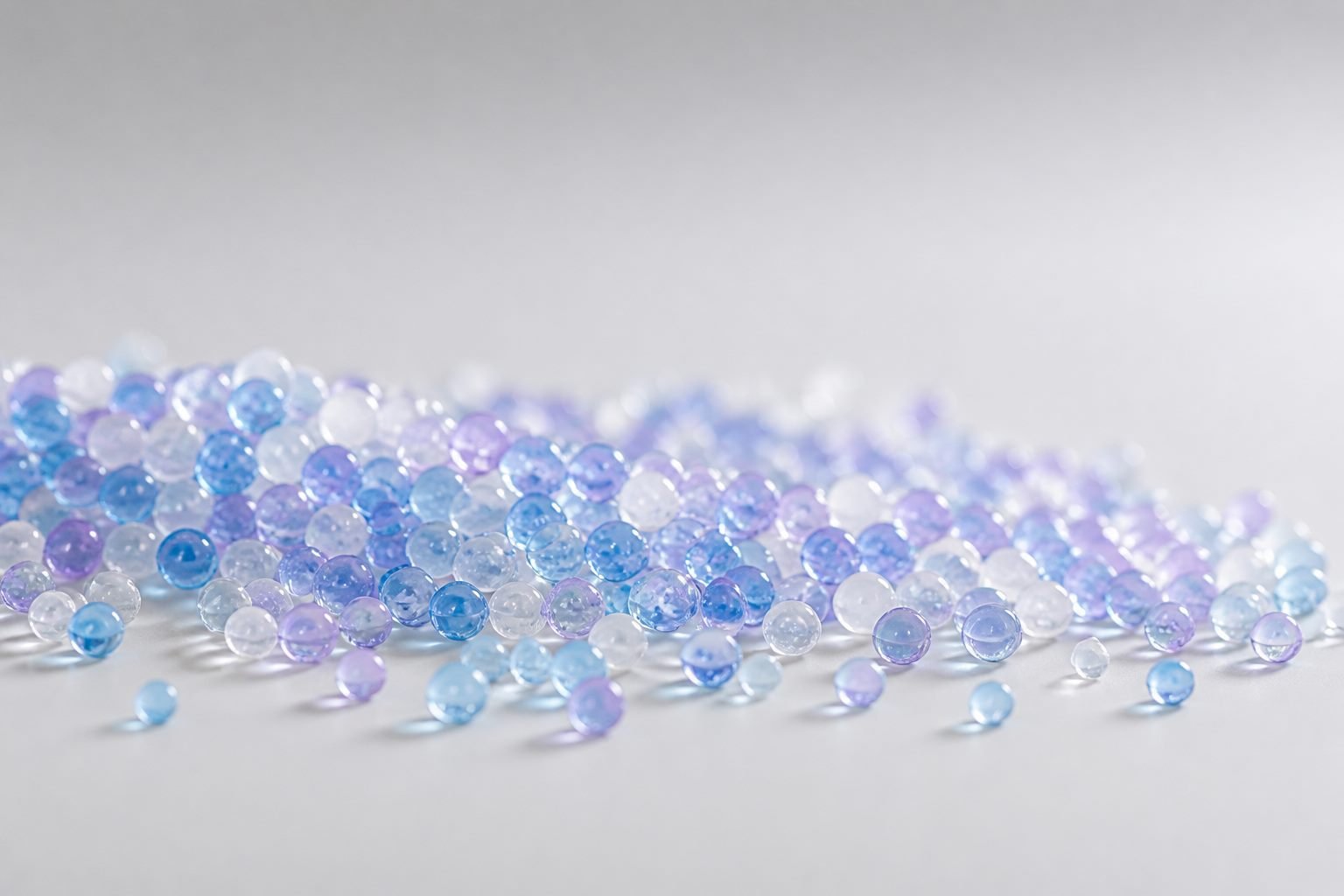
Scent booster beads are small, dissolvable granules added to the washing machine drum before a wash. Unlike detergent, they don’t clean. Unlike fabric softener, they don’t soften fibers. Their single job is to deposit fragrance onto fabric during the wash cycle — a fragrance that survives rinsing, drying, and weeks in a drawer.
Most beads are built on a carrier system that slowly releases perfume oils as it dissolves in water. The result is a scent profile that lingers far longer than detergent fragrance alone, with motion-activated release that refreshes the scent as fabric moves during wear.
Why the Category Is Growing
Demand is being pulled by several long-term shifts in how consumers do laundry:
- Scent as a status signal — fragrance longevity has become a top-ranked laundry attribute in consumer research, and social media reviews of laundry scent products generate outsized engagement.
- Cold-wash migration — as more households wash at lower temperatures to save energy, traditional detergent fragrance performs worse, and dedicated scent products fill the gap.
- Compact formats — concentrated beads reduce shelf space, packaging weight, and shipping cost per wash cycle compared with liquid alternatives.
- Premiumization — scent boosters command a higher price per wash than detergent, improving basket value for retailers.
For B2B buyers, the practical takeaway: this is a category where private label and regional brand entries are growing fastest, because the product is simple to explain and the differentiation happens in fragrance and packaging — decisions a manufacturer can execute with you.
How Scent Booster Beads Work
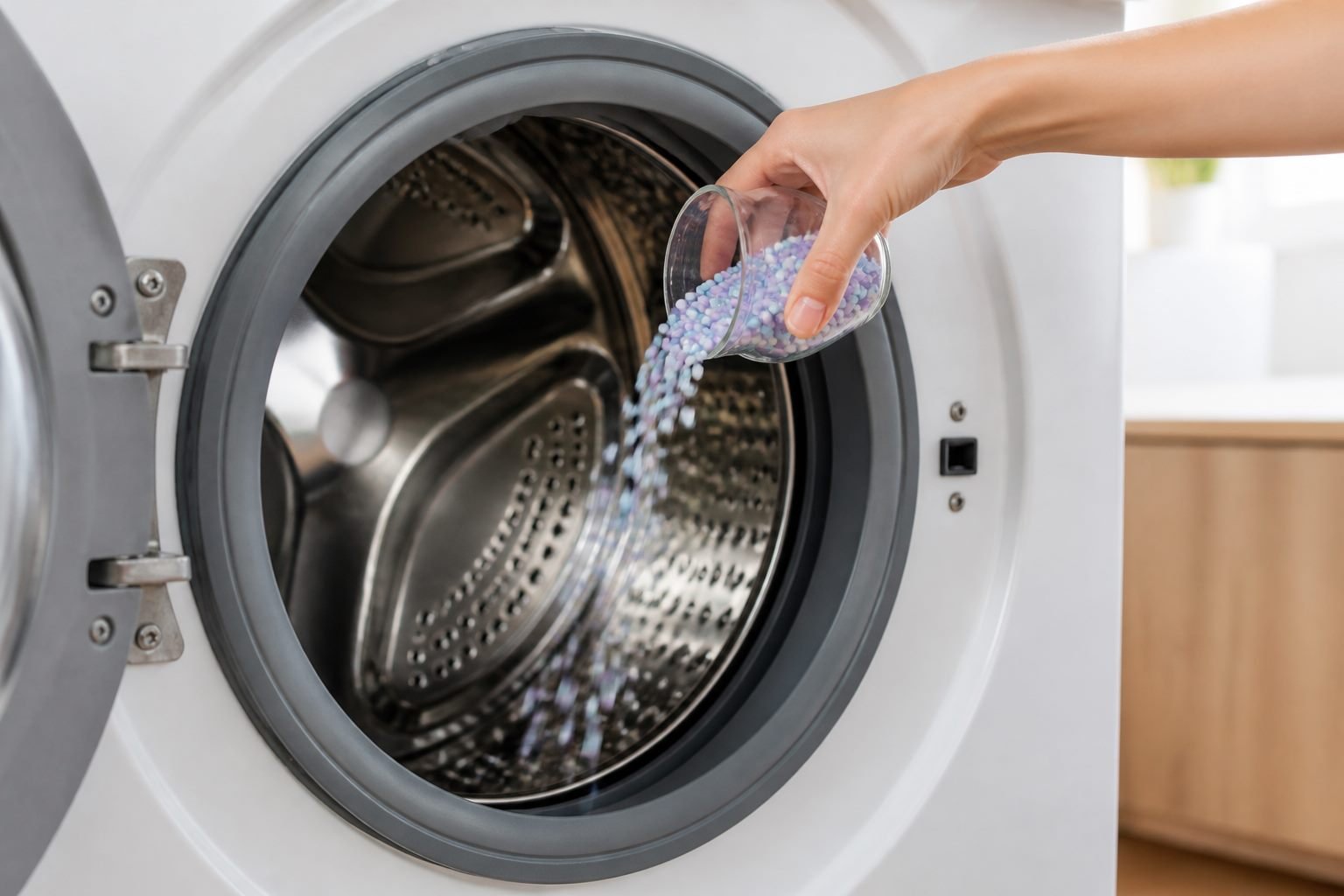
The core technology is straightforward. Each bead is a solid carrier — typically a water-soluble polymer matrix — loaded with perfume micro-capsules or fragrance oils. In the drum:
- Water dissolves the carrier during the wash cycle.
- Fragrance deposits onto fabric fibers; micro-capsules physically attach to the fiber surface.
- Friction during wear ruptures the capsules, re-releasing scent — the effect marketed as “motion-activated freshness.”
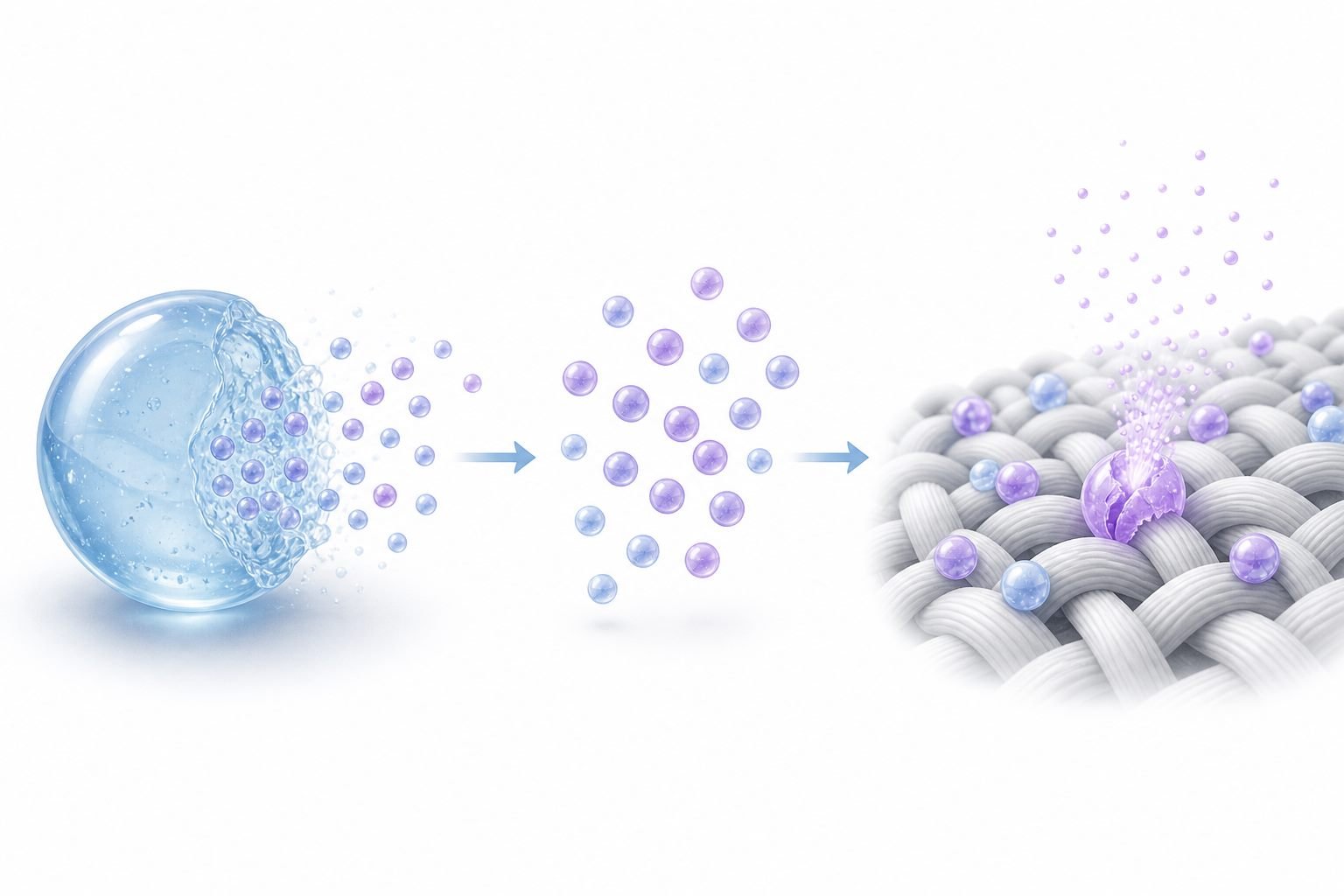
This capsule mechanism is why quality varies so much between manufacturers. Poorly engineered capsules burst in the wash instead of attaching, or fail to rupture at all. When you evaluate samples, the test is simple: wash, dry, then rub the fabric and smell the difference.
Ingredients: What Buyers Should Verify
You don’t need a chemistry degree, but you do need to ask the right questions. A typical formulation includes:
- Carrier matrix — the dissolvable structure holding the fragrance; its quality determines residue behavior and dissolution rate.
- Fragrance oils — typically 10–30% of bead weight for effective performance; hypoallergenic and IFRA-compliant options are available for sensitive-skin positioning.
- Colorants — food/beverage-grade dyes create the visual identity of the beads in transparent packaging.
- Optional actives — some brands add odor neutralizers, fabric-conditioning agents, or anti-static components.
Two verification points matter most for buyers:
- IFRA compliance — the International Fragrance Association publishes safety standards for fragrance use; request the manufacturer’s IFRA certificates for each scent option.
- Skin-safety testing — ask whether the formulation has been assessed for skin contact under intended use, particularly if you target households with children or sensitive skin.
Packaging Formats and Their Trade-offs
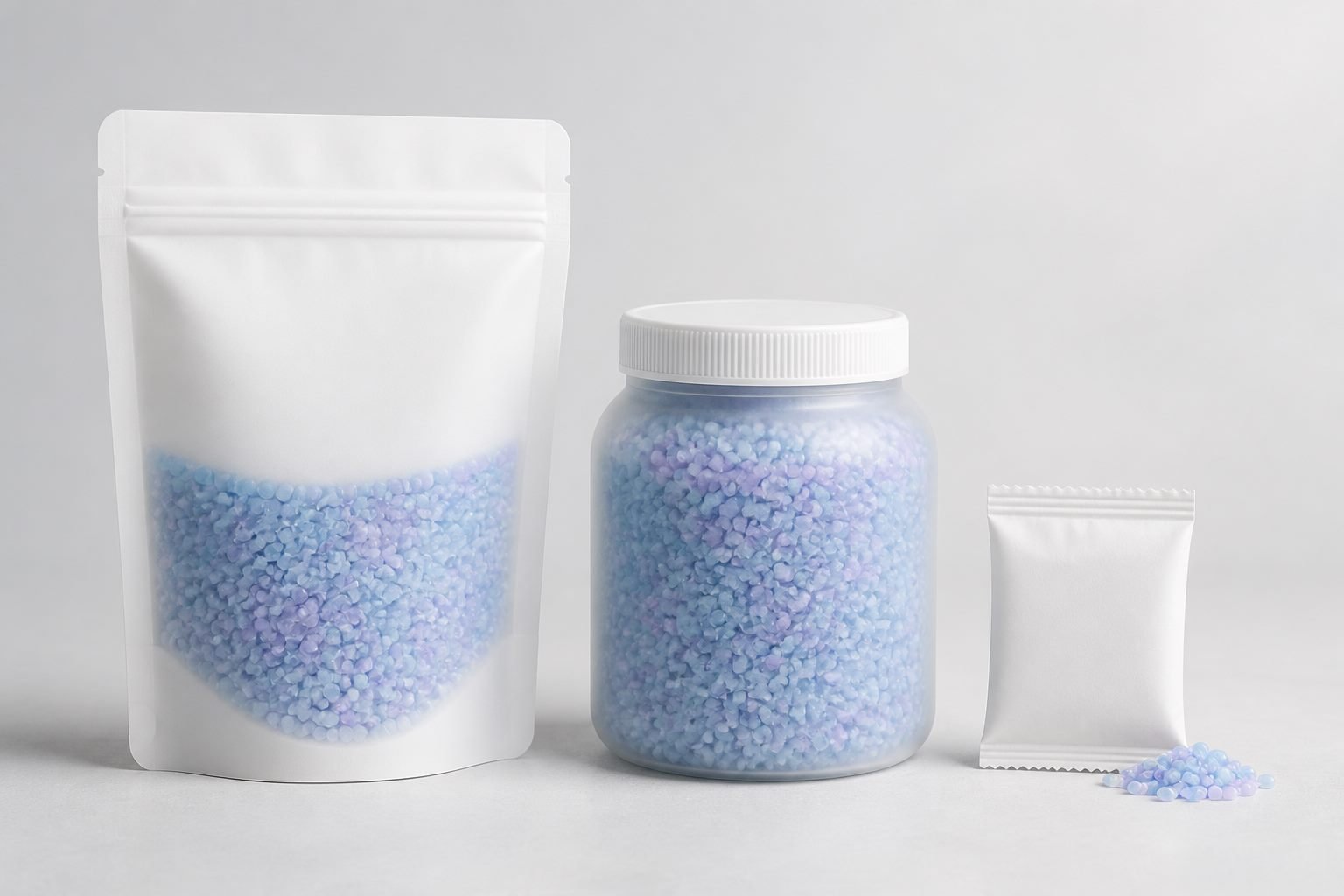
Packaging is a commercial decision as much as a functional one. The main formats:
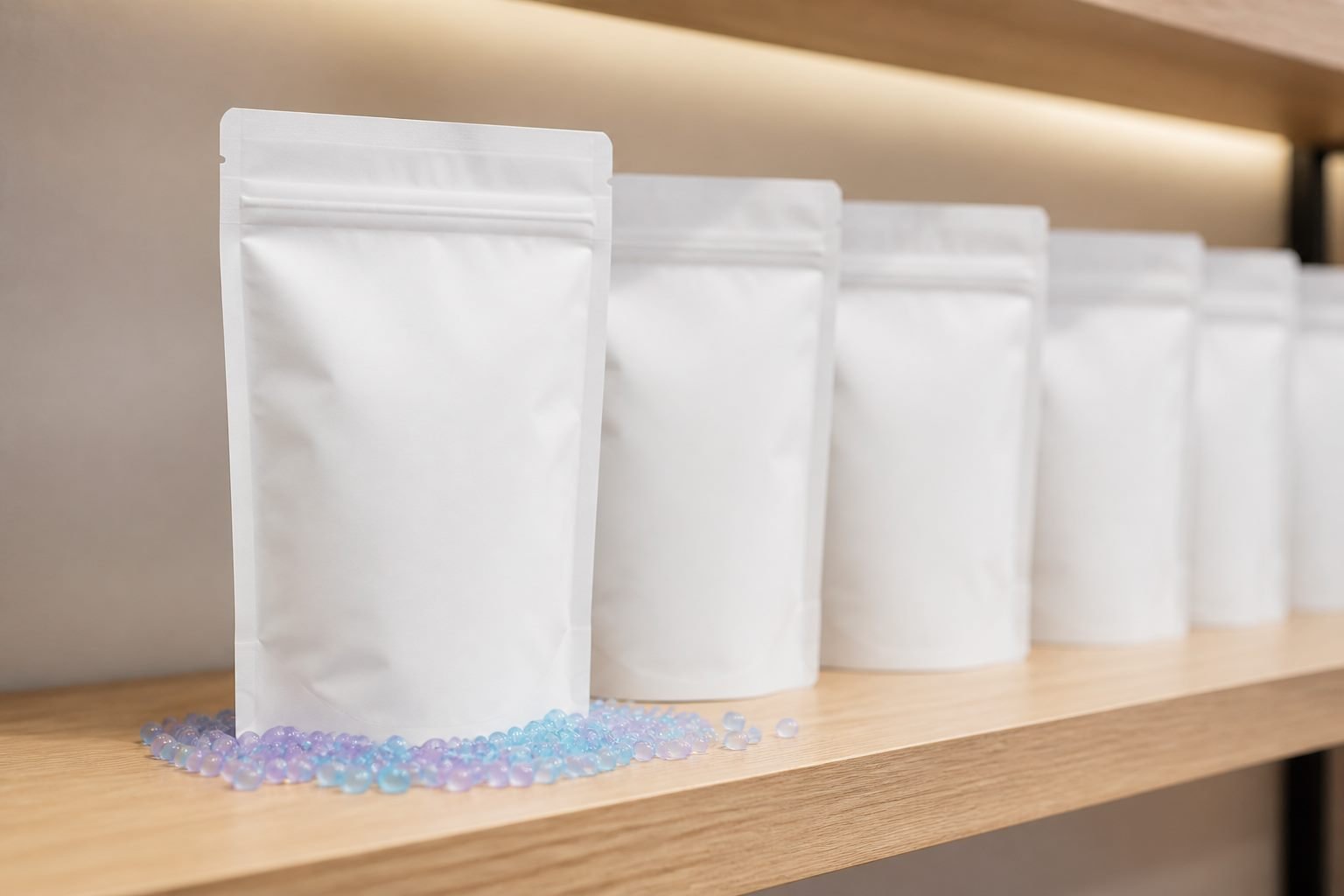
- Resealable pouches (stand-up, flat bottom) — the mainstream choice; low cost, light, good for 150–400g sizes; requires a reliable zip-lock or the product loses freshness.
- Jars and tubs — premium shelf presence, better scent retention, higher logistics cost; common for gift-oriented or premium lines.
- Single-dose sachets — portion control for hospitality, e-commerce samples, or trial sizes; also used in subscription bundles.
For export, ask about seaworthy cartons and moisture protection — beads are hygroscopic (they absorb humidity), so tropical-climate storage performance should be discussed early, especially if your market includes Southeast Asia or Latin America.
OEM vs ODM: Which Model Fits You?
Both models let you sell under your own brand. The difference is who owns what:
- OEM (Original Equipment Manufacturer) — you bring the finished specification: fragrance, color, bead format, packaging design. The factory executes. Best when your brand already has a defined product identity.
- ODM (Original Design Manufacturer) — the factory offers a ready formulation and packaging concept you customize: choose the scent from a library, apply your label. Fastest route to market, lowest development cost.
A practical middle path many buyers take: start ODM to validate the market with minimal investment, then move to OEM for the refill or second generation once volume justifies custom development. If you’re new to the distinction, our article on what OEM vs ODM actually means for home care brands breaks it down in detail.
Commercial Questions to Settle Before Production
Before you commit to a production order, make sure these are answered in writing:
- MOQ — typical category MOQs vary widely by manufacturer and format; confirm the MOQ per SKU and per fragrance, and whether trial orders below MOQ are possible at a surcharge.
- Lead time — confirm both sampling lead time and mass production lead time separately; they differ, and sampling is usually the schedule risk.
- Fragrance options — how many scents are available off-the-shelf, what custom fragrance development costs, and who owns the custom scent.
- Exclusivity — whether the factory can grant your market exclusive use of a fragrance or color for a defined period.
- Documents — SDS/MSDS, IFRA certificates, and allergen statements should be standard deliverables; ask which are provided per order vs. per project.
- Shelf life and stability data — request the test basis for the claimed shelf life, and stability testing for your target climates.
Quality Checks That Protect Your Launch
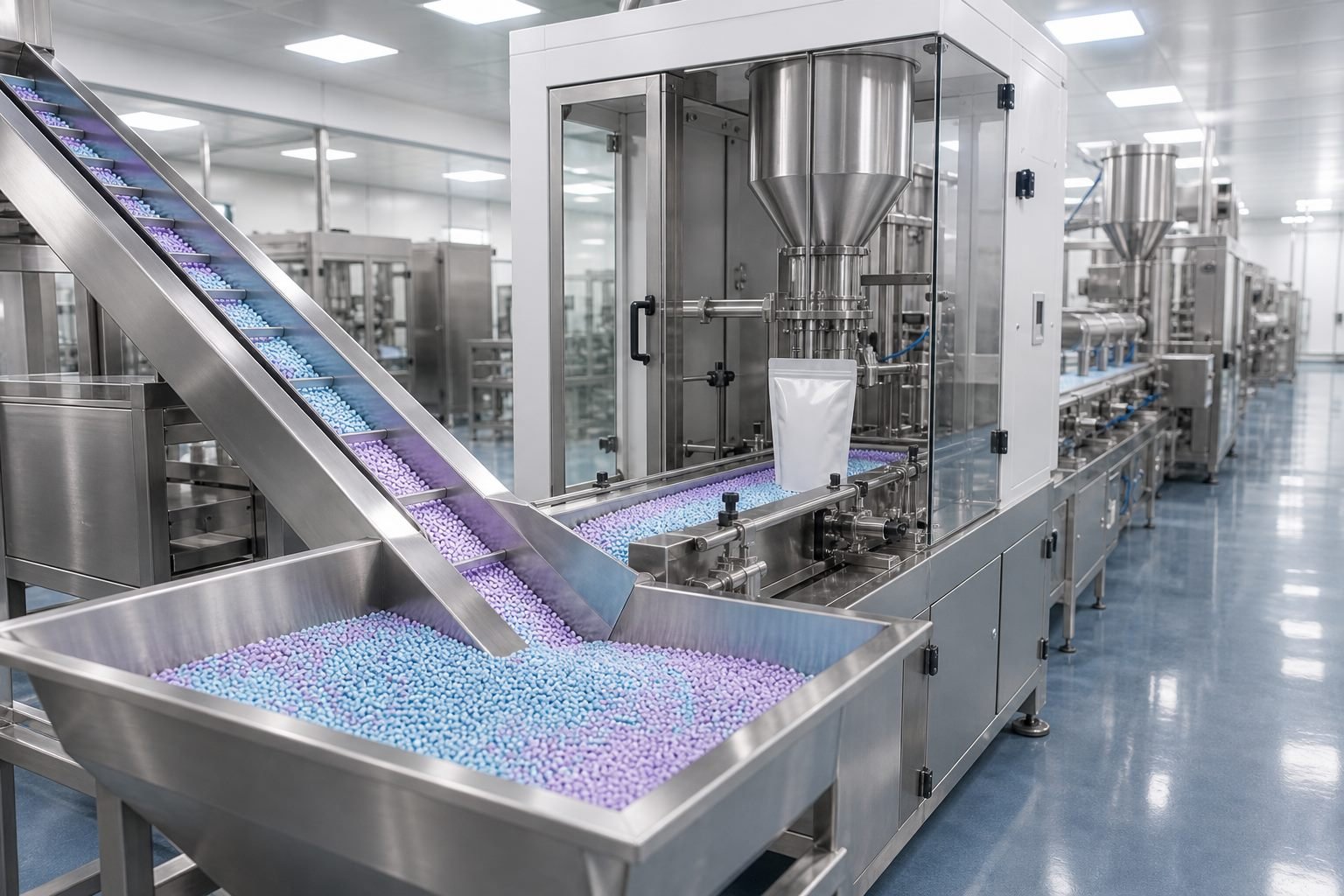
A disciplined manufacturer will welcome these questions. At Eazykleen, the checks we run for scent booster programs include:
- Dissolution testing — beads must fully dissolve across wash temperatures, including cold wash cycles.
- Scent deposition and longevity testing — standardized wash-and-wear protocols that measure fragrance retention through drying and storage.
- Capsule integrity testing — verifying micro-capsules attach to fabric and rupture under normal wear friction, not in the drum.
- Color consistency — batch-to-batch color matching against the approved standard.
- Third-party testing — finished products undergo third-party testing, with test reports available to buyers.
Why Source Scent Boosters with Eazykleen
Eazykleen develops and manufactures home care and pet care products for B2B customers — brands, retailers, distributors, and startups, primarily in North America and Australia. For scent booster programs, that means:
- 20+ years of manufacturing experience and an ISO-certified quality management system, with a 20,000 m² production base.
- Formulation flexibility — from the fragrance library for ODM launches to full custom development, with fragrance, color, and performance customization.
- Packaging support — pouch, jar, and sachet formats with export-grade carton packing.
- Documentation as standard — SDS, IFRA information, and allergen statements are provided as project deliverables, with third-party test reports available.
- Program scalability — start with a trial order to validate your market, then scale volumes without changing the manufacturing relationship.
Scent booster beads reward buyers who invest in the details — the right fragrance, the right format, and a manufacturer whose quality process you can verify. If you’re planning a laundry care line, bring your requirements to the conversation: target market, positioning, and volumes. We’ll map them to formulation and packaging options and quote in one pass.