
An IFRA certificate confirms that the fragrance in a cleaning product meets internationally recognized safety standards. For B2B buyers, it is one of the documents retail chains and regulators expect — and one that many sourcing professionals skip reading because the format is unfamiliar. This guide explains what an IFRA certificate for cleaning products actually says, which sections matter for your sourcing decisions, and the red flags that signal a compliance problem.
What Is IFRA and Why Does It Matter for B2B Buyers?
IFRA — the International Fragrance Association — sets safety standards for fragrance ingredients used in consumer products. Its standards are based on safety assessments by RIFM (the Research Institute for Fragrance Materials), an independent body that evaluates toxicity, sensitization, and environmental data for each fragrance material.
For B2B buyers, IFRA compliance matters because:
- Retail buyers require it — major retailers in North America and Australia routinely ask for IFRA certificates during vendor onboarding.
- Regulatory risk — fragrance ingredients restricted or prohibited by IFRA are often the same ones targeted by regulators. Selling non-compliant products creates recall and liability exposure.
- Brand protection — a fragrance safety incident damages consumer trust far more than a packaging defect.
The Structure of an IFRA Certificate: Section by Section
A standard IFRA Certificate of Conformity includes these sections. Here is what each one means and what to look for.
1. Fragrance Compound Identification
This section names the specific fragrance mixture the certificate covers — typically by internal code or trade name. It is not a full ingredient list. Verify that the compound name matches the fragrance used in your product specification. If the names do not align, the certificate does not cover your product.
2. IFRA Standards and Restrictions
This is the core section. It lists any IFRA-restricted ingredients in the mixture and specifies the maximum safe concentration for each product category. IFRA defines categories by exposure type — for cleaning products, the relevant categories are typically:
| IFRA Category | Product Type | Typical Exposure |
|---|---|---|
| Category 1 | Lip products | Direct, prolonged skin contact |
| Category 3 | Hand sanitizer, wipes | Direct skin contact, rinsed |
| Category 9A | Detergents, surface cleaners | Indirect skin contact, diluted |
| Category 9B | Air fresheners, sprays | Airborne, minimal skin contact |
| Category 12 | Household cleaning products not otherwise categorized | Indirect, intermittent |
Most home care products — laundry detergents, surface cleaners, bathroom cleaners — fall under Category 9A or Category 12. Check that the certificate covers the category matching your product type. A certificate that only lists Category 10 (general) may not meet a retailer’s specific requirement.
3. Application Date
IFRA periodically updates its standards (typically every 1–2 years). The certificate states which amendment it conforms to. A certificate based on a significantly outdated amendment may not reflect current restrictions. Compare the amendment date to the latest published IFRA standard.
4. Declaration of Conformity
A statement by the fragrance house that the compound complies with IFRA standards at the stated concentration for the stated categories. This is the manufacturer’s claim — it is not a third-party audit. The value of this declaration depends on the credibility of the issuing fragrance house.
IFRA Certificate vs SDS: What Each Document Covers
Buyers sometimes confuse the IFRA certificate with the Safety Data Sheet. They serve different purposes.
| Document | Scope | Issued by | Purpose |
|---|---|---|---|
| IFRA Certificate | Fragrance compound only — ingredient safety and use restrictions | Fragrance house (the supplier of the fragrance oil) | Confirms fragrance meets IFRA safety standards for specific product categories |
| SDS / MSDS | Entire finished product — hazards, first aid, handling, disposal | Product manufacturer or formulator | Workplace safety and regulatory compliance for the complete formulation |
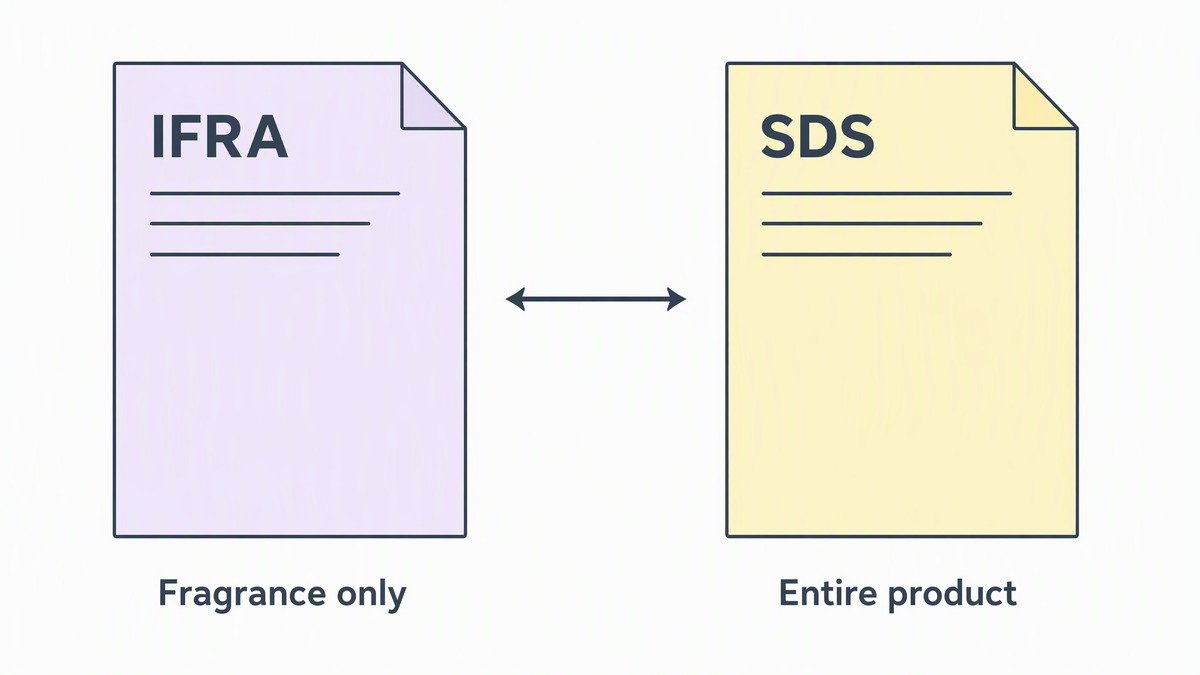
You need both. An SDS without an IFRA certificate tells you the product is safe to handle and ship but says nothing about whether the fragrance itself meets category-specific safety limits. For a detailed walkthrough of the SDS, see our guide to reading a cleaning product SDS.
Red Flags to Watch for on an IFRA Certificate
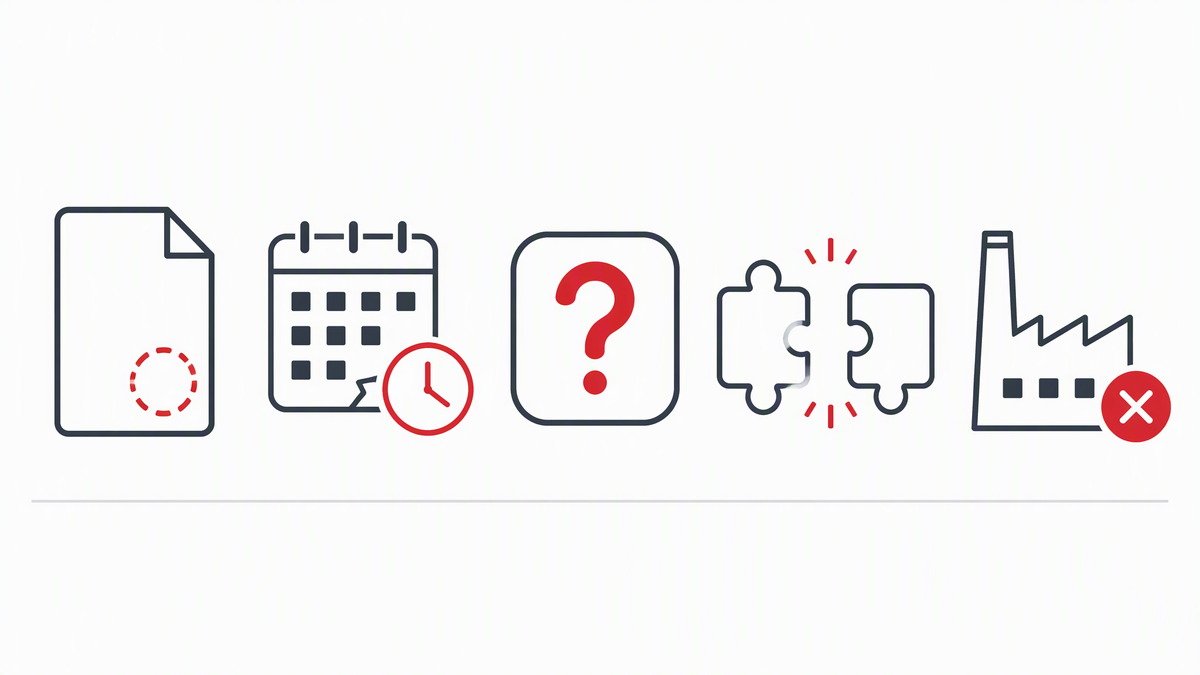
- Missing category coverage — the certificate does not list the product category you are selling into (e.g., only Category 10 when your retailer requires Category 9A).
- Outdated amendment — the certificate references an IFRA amendment more than two revisions behind the current standard.
- No quantitative restrictions listed — a certificate that simply declares “compliant” without specifying restricted ingredients and their limits provides no verifiable information.
- Mismatched compound name — the fragrance code on the certificate does not match the one in your product specification.
- Certificate issued by the product manufacturer, not the fragrance house — IFRA certificates should originate from the fragrance supplier who formulated the oil, not the factory that blended the finished product.
How to Request IFRA Certificates from Your Manufacturer
When evaluating or onboarding a manufacturer, make IFRA documentation part of your standard request:
- Ask at the inquiry stage — request IFRA certificates for every fragrance option you are considering, before you select a scent.
- Specify the product category — tell the manufacturer which IFRA category your product falls under, so the certificate covers the correct use type.
- Request per-fragrance certificates — a single “blanket” certificate covering all fragrances is not standard practice. Each fragrance compound should have its own certificate.
- Verify the issuing body — confirm the certificate comes from a recognized fragrance house or their authorized representative.
- Store and update — IFRA standards change. Set a reminder to request updated certificates when IFRA publishes new amendments.
Common Misconceptions About IFRA Compliance
- “IFRA certification is a legal requirement” — it is not. IFRA is an industry self-regulation system. However, many retailers treat it as a de facto requirement, and IFRA-restricted ingredients often overlap with those targeted by formal regulations.
- “If the product has an SDS, it is IFRA-compliant” — an SDS and an IFRA certificate address different questions. One covers workplace safety for the entire product; the other covers fragrance-specific safety limits. You need both.
- “All fragrance-free products are automatically IFRA-compliant” — fragrance-free products do not require IFRA certificates, but “unscented” products sometimes contain masking fragrances that do.
- “The manufacturer’s ISO certification covers fragrance compliance” — ISO 9001 certifies the quality management system, not the safety of individual fragrance ingredients.
What Eazykleen Provides for Fragrance Compliance
As a home care and pet care manufacturer serving B2B customers in North America and Australia, Eazykleen includes IFRA information as a standard project deliverable:
- IFRA certificates are available for each fragrance option in our ODM library and for custom-developed OEM fragrances.
- Fragrance, allergen, and IFRA information is provided alongside SDS documentation.
- Products undergo third-party testing, with test reports available to buyers.
- Our quality management system — ISO certified and SMETA audited — ensures documentation is maintained and up to date.
If you are sourcing scented home care or pet care products, request the IFRA certificate early in the conversation. Bring your target market, product type, and retail requirements — we will match the fragrance documentation to your compliance needs. Request a quote to start.
Frequently Asked Questions
Is an IFRA certificate required by law?
No. IFRA is a voluntary industry standard, not a legal mandate. However, many major retailers require IFRA certificates during vendor onboarding, and IFRA-restricted ingredients frequently overlap with substances regulated by government agencies. Treating IFRA compliance as optional creates avoidable risk.
Who issues an IFRA certificate?
The IFRA certificate is issued by the fragrance house — the company that formulated and supplied the fragrance oil. It should not be issued by the factory that manufactured the finished product. If your manufacturer provides the certificate, verify it originates from their fragrance supplier.
What is the difference between IFRA Category 9A and Category 12?
Category 9A covers products with indirect skin contact and diluted use — such as laundry detergents and surface cleaners. Category 12 covers household cleaning products not classified elsewhere. Both are common for home care products, but some retailers require the specific category that matches your product. Check your buyer’s requirements.
How often do IFRA standards change?
IFRA publishes amendments approximately every 1–2 years. Each amendment may add new restrictions or revise existing limits. When a new amendment takes effect, request updated certificates from your manufacturer to ensure ongoing compliance.
Can I sell a product without an IFRA certificate?
Technically yes — IFRA compliance is voluntary. Practically, if you sell to major retailers or into regulated markets, you will likely be asked for IFRA documentation during onboarding or audit. Starting without it limits your distribution options and creates compliance risk if a fragrance ingredient is later restricted.
—