
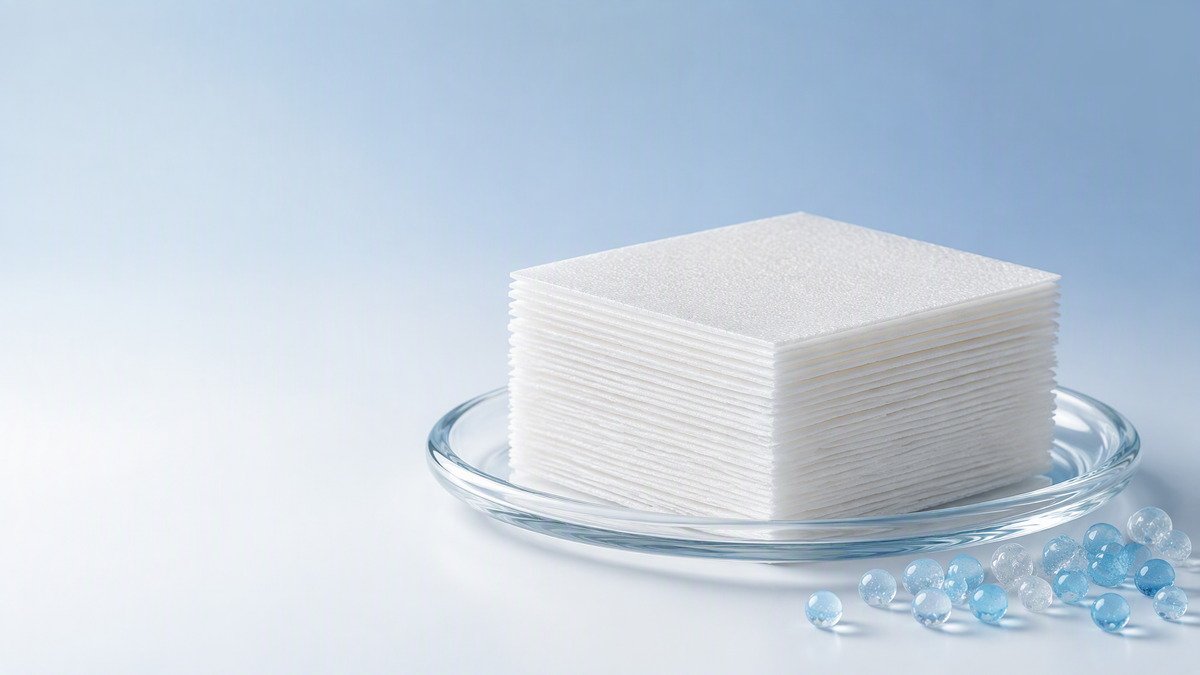
Laundry detergent sheets are a compact, low-mess alternative to liquid and powder detergents — and one of the fastest-growing formats in laundry care. For brands and retailers evaluating a laundry detergent sheets manufacturer, the product’s simplicity hides real formulation and quality variables that determine whether your private label launch succeeds or generates returns. This guide lays out what to verify before you commit to production.
What Are Laundry Detergent Sheets?
Detergent sheets are thin, pre-measured strips of concentrated detergent that dissolve in water. Each sheet replaces a dose of liquid or powder. The format appeals to brands because it ships light, shelves compact, and positions well for eco-conscious consumers — but the underlying formulation varies significantly between manufacturers, and those differences show up in wash performance, residue, and shelf stability.
How Detergent Sheets Work: The Formulation Layer
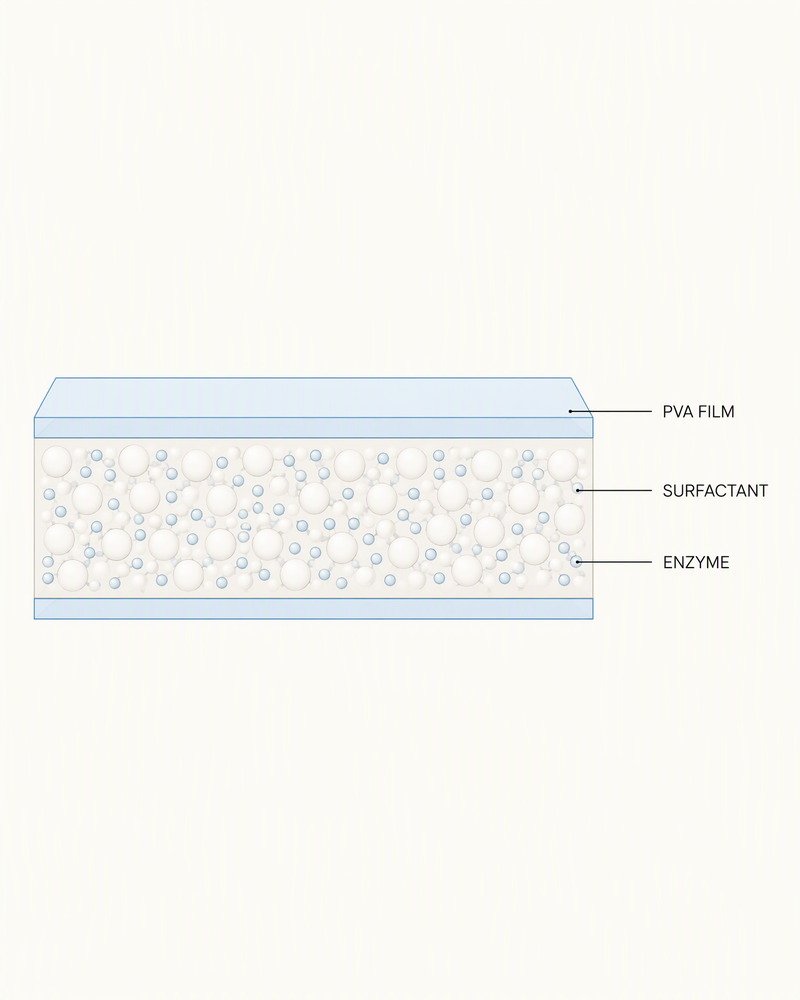
Most sheets are built on a water-soluble polymer matrix — typically polyvinyl alcohol (PVA) — that holds surfactants, enzymes, builders, and fragrance in a dry film. When the sheet contacts water, the PVA dissolves and releases the actives into the wash.
Key formulation components buyers should understand:
- Surfactant system — linear alkylbenzene sulfonate (LAS) and alpha-olefin sulfonate (AOS) are common; some manufacturers offer plant-derived alternatives for “bio-based” positioning.
- Enzymes — protease for protein stains, amylase for starches, lipase for oils. Not every sheet includes enzymes; their absence is the #1 reason sheets underperform liquids on tough stains.
- Water-soluble polymer — PVA is dominant. Some buyers ask about PVA-free options due to microplastic concerns; cellulose-based alternatives exist but are less proven at scale.
- Fragrance and color — IFRA-compliant options are standard; hypoallergenic / fragrance-free versions are available for sensitive-skin lines.
OEM vs ODM for Detergent Sheets: Which Model Fits?
The choice between OEM and ODM determines how much of the product you own and how fast you launch.
| Factor | OEM | ODM |
|---|---|---|
| Formula ownership | You own the specification | Factory owns the base formula |
| Development time | Longer — formulation, testing, approval | Shorter — select from existing library |
| Upfront cost | Higher — R&D, custom tooling | Lower — customization within existing range |
| Differentiation | Full control over ingredients and performance | Customization limited to fragrance, color, packaging |
| Best for | Brands with a defined product identity | Brands entering the category for the first time |

Many buyers start ODM to validate the market, then move to OEM for their second generation. For a detailed breakdown of what each model means in practice, see what OEM vs ODM actually means for home care brands.
Dissolution Testing: The Quality Check That Matters Most
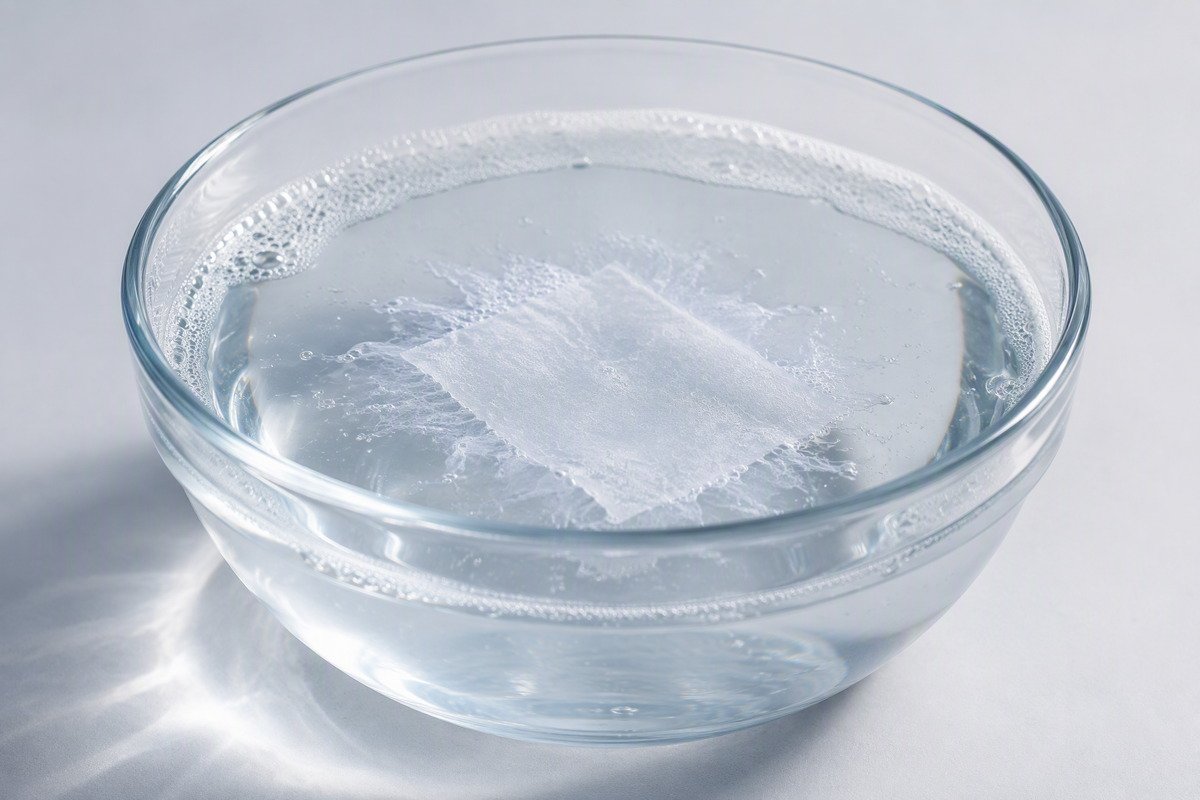
Poor dissolution is the top complaint end consumers have with detergent sheets — sheets that leave residue on clothes or in the drum damage your brand from the first wash. Before you approve any formulation, verify the manufacturer runs these tests:
- Cold-water dissolution — sheets must fully dissolve at 15–20 °C (60–68 °F), the temperature many consumers now use. Request video evidence or third-party test data.
- Sheet integrity in humid storage — sheets should not stick together or lose structural integrity in standard retail storage conditions (25 °C / 60% RH).
- Dose consistency — each sheet in a batch should weigh within ±5% of the target. Under-dosed sheets underperform; over-dosed sheets waste cost and can leave residue.
If the manufacturer cannot provide dissolution test data, treat that as a disqualifier.
Packaging Decisions That Affect Shelf Life and Logistics
Detergent sheets are hygroscopic — they absorb moisture. Packaging is not optional; it is a product-performance decision.
- Resealable pouches — the mainstream format. Low cost, light, good for 30–60 sheet counts. Zip-lock quality directly affects shelf life; request aging data for the specific pouch material.
- Cardboard boxes with inner liner — premium shelf presence, better protection in humid climates. Higher logistics cost per unit.
- Individual sachets — portion-control for hospitality, travel, or subscription models. Highest per-unit packaging cost.
- Export carton strength — for ocean freight, confirm the manufacturer uses moisture-barrier inner liners and sufficient stacking strength.
Discuss tropical-climate stability data early, especially if your market includes humid regions.
What to Verify About the Manufacturer’s Quality System
A competent laundry detergent sheets manufacturer should welcome these questions:
- ISO 9001 certification — confirms a documented quality management system is in place. Eazykleen holds ISO certification; ask for the certificate number and scope.
- SMETA audit — social compliance audit increasingly required by major retailers. Eazykleen is SMETA audited.
- Third-party product testing — request test reports for dissolution, residue, pH, and heavy metals from an accredited lab.
- Batch traceability — can the manufacturer trace every batch from raw material to finished carton? This matters for recall readiness.
- SDS/MSDS availability — a manufacturer that cannot provide a Safety Data Sheet on request is not ready for retail-market buyers.
MOQ, Lead Time, and Trial Orders: Settle These Before Production
These commercial terms vary by manufacturer and by product complexity. Clarify in writing:
- Standard MOQ — confirm per SKU and per fragrance. Standard MOQ per product is confirmed at quotation.
- Trial order policy — can you place an order below standard MOQ for market testing? Eazykleen accepts trial orders below standard MOQ for first-time partners; confirm the surcharge and minimum.
- Sampling lead time — separate from mass production. Typically 1–3 weeks depending on customization level.
- Mass production lead time — 2–4 weeks for ODM formulations using existing recipes; longer for OEM development.
Common Mistakes When Sourcing Detergent Sheets
- Skipping dissolution testing — the single most common error. Brands approve a sample on visual appeal, then face residue complaints at launch.
- Ignoring PVA as an ingredient question — if your market includes consumers or regulators concerned about microplastics, you need to address PVA proactively or offer a PVA-free alternative.
- Choosing the cheapest unit price without checking dose consistency — under-weight sheets mean under-dosed washes and negative reviews.
- Not discussing shelf-life data — sheets that clump in the pouch after 6 months destroy consumer confidence. Ask for accelerated aging test results.
- Assuming all ODM formulas are equal — enzyme content, surfactant concentration, and fragrance quality vary between manufacturers’ libraries. Test multiple samples side by side.
Why Eazykleen Manufactures Detergent Sheet Programs
Eazykleen develops and manufactures home care and pet care products for B2B customers — brands, retailers, distributors, and startups, primarily in North America and Australia. For detergent sheet programs:
- 20+ years of manufacturing experience with an ISO certified quality management system and a 20,000+ m² production base.
- Formulation flexibility — ODM library for fast launches, or OEM development with custom surfactant systems, enzyme packages, and fragrance.
- Packaging support — pouch, box, and sachet formats with export-grade carton packing and moisture-barrier options.
- Documentation as standard — SDS, IFRA information, and allergen statements are project deliverables, with third-party test reports available.
- Trial order option — start below standard MOQ to validate your market, then scale without changing the manufacturing relationship.
Frequently Asked Questions
Do laundry detergent sheets work as well as liquid detergent?
Performance depends on formulation. Sheets that include enzymes and adequate surfactant levels match liquid detergent on everyday soils. Sheets without enzymes typically underperform on protein and oil stains. Always test the specific formulation against your benchmark product before committing.
What is the typical MOQ for private label detergent sheets?
MOQ varies by manufacturer and by order complexity. Many manufacturers set MOQ per SKU and per fragrance. Eazykleen accepts trial orders below standard MOQ for first-time partners, allowing market validation before full-volume commitment. Exact MOQ is confirmed per SKU and fragrance at quotation.
Are PVA-based detergent sheets considered microplastics?
The classification of PVA as a microplastic is debated. Some regulators and NGOs argue that PVA does not fully biodegrade in all wastewater conditions; PVA-free alternatives using cellulose-based carriers are available from some manufacturers. If your brand targets eco-conscious consumers, discuss PVA-free options with your manufacturer early.
How should I store detergent sheets before sale?
Store in a cool, dry place away from direct moisture. Sheets are hygroscopic — they absorb humidity and can clump or stick together if the packaging seal fails. Request accelerated aging data from your manufacturer to confirm shelf life under your market’s climate conditions.
Can I get custom fragrance for my detergent sheet brand?
Yes. Most OEM/ODM manufacturers offer fragrance customization as a standard service. Ask for the fragrance library size, whether custom fragrance development carries an extra fee, and whether the manufacturer provides IFRA certificates for each scent option.
—